ISFAHAN MONUMENT
Ghushkhane Garden
Vertance Yuzukchian, one of the religious authorities of Jolfa of Isfahan during Mohammad Shah Qajar period, witnessed strange matches in Ghushkhane garden.

School and Tomb of Abu Ali Sina
Ibn Sina school
In the year 414 Ah, a man in sufi dress, from Isfahan`s Bidbakhshan and Bidabad neighborhood entered Isfahan. This man was an important scientist, the philosopher and doctor of Iranian history.

Monuments of Isfahan
Ali Mosque’s Minaret
One of the highest minarets in Isfahan is the “Ali Mosque” minaret. This monument was built during the time of Sultan Sanjar Seljuki. About the minarets and rods of Isfahan, there are many folk tales.


Archive Heritage Sites

Isfahan's Heritage: Sheikh Bahaei Hammam
The Mysterious Bath and Its Candle!
Lots of interesting stories have been told about Sheikh Bahaei Public Bath; but the one that is more famous than all others is the story of its candle, the candle that never went out.

Isfahan's Heritage: The Maqsoud Beyk Mosque
The Shah’s Beloved Calligrapher!
Much has been said on the fame and glory of Mir Emad, but there is a story that explains the cause of Shah Abbas’s estrangement from the renowned calligrapher.

Isfahan's Heritage: Dar ul-Batikh
The Dagger that Hit the Heart of an Empire!
During the reign of the Seljuks, circa one thousand years ago, Isfahan was the capital of a great empire, which spread from Transoxiana to the Mediterranean banks.

Isfahan's Heritage: Rehnan Hammam
Bathing for Every Occasion!
There have been four platforms in Rehnan Hammam (Rehnan Traditional Bath), and each of them had a special title.

Isfahan's Heritage: Jahan-Nama Palace
The Lady’s Pretext
Lady Ozma, the sister of Zell-e Soltan, complained to the king that Jahan Nama Palace overlooks my residence in Hasht Behesht Palace.

Isfahan's Heritage: The Sheikh-ul-Islam House
The Princess’s Wedding Gift
The Sheikh-ul-Islam Historic House was a gift from Shah Abbas II to his daughter, Sarv-Ghad Khanum, on the occasion of her marriage to Mohaghegh-e Sabzevari, who was a famous scholar of the Safavid period.

Isfahan's Heritage: The Khajou Bridge
A Bridge Full of Stories!
The Shahi Bridge or the Khajou Bridge was built during the reign of Shah Abbas II and most probably on the ruins of the old Hassan Beyk Bridge.

Isfahan's Heritage: The Qeysarie Gate
The Lost Plunder
On top of the Qeysarie Gate, a hole can be seen, which is the empty place of a clock made by an English man named ‘Fasty’ for Shah Abbas I.

Isfahan's Heritage: Jahan Hotel
The Most Modern Hotel of Isfahan in the Pahlavi Era
Jahan Hotel, which had started working much before the Abbasi Hotel, continued its activities up until the 60s (SH), yet was suddenly abandoned.

Isfahan's Heritage: Chaharbagh
The Most Familiar Path
Isfahan’s Chaharbagh was the busiest passage of the city up until a few decades ago and not just a place to pass along, but one to stay in and visit friends at.

Isfahan's Heritage: The Abbasi Jame Mosque
The Marble Stones of the Mosque
When a shortage of marble was faced during the construction of the Abbasi Jame Mosque, Shah Abbas ordered them to compensate for it by removing and reusing the marble stones of the Atiq Jame Mosque.

Isfahan's Heritage: The Si-o-Se Pol
Why Thirty Three?!
Leaving aside whether or not the Si-o-Se Pol’s arches are actually thirty three, it is said among the people that the bridge’s name comes from the thirty three shares indicated in Sheikh Bahaei’s scroll.
-
Thursday, th Dec 2024

The Safar-name of Naser Khosrow
-
Monday, th Dec 2024
Turquoise Capital Shining in Greenery
-
Wednesday, th Oct 2024
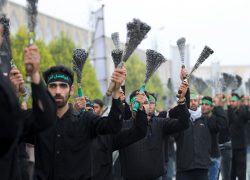
The atmosphere of Moharram in the Naqshe Jahan Square
-
Monday, th Oct 2024
The legendary downfall of a truth
-
Monday, th Jul 2023
Muharram Ambience in Naqsh-e Jahan Square
-
Saturday, th Jul 2023
The Ladies’ Street
-
Wednesday, th Jul 2023
A Skirt Full of Roses