ISFAHAN MONUMENT
Ghushkhane Garden
Vertance Yuzukchian, one of the religious authorities of Jolfa of Isfahan during Mohammad Shah Qajar period, witnessed strange matches in Ghushkhane garden.

School and Tomb of Abu Ali Sina
Ibn Sina school
In the year 414 Ah, a man in sufi dress, from Isfahan`s Bidbakhshan and Bidabad neighborhood entered Isfahan. This man was an important scientist, the philosopher and doctor of Iranian history.

Monuments of Isfahan
Ali Mosque’s Minaret
One of the highest minarets in Isfahan is the “Ali Mosque” minaret. This monument was built during the time of Sultan Sanjar Seljuki. About the minarets and rods of Isfahan, there are many folk tales.


Archive Heritage Sites

The Qeysarie Gate
The lost plunders
On the top of the Qeysarie Gate, there are some foramens as the empty place of a clock made by an English man named ‘Fasty’ for Shah Abbas I. when the creator died, the clock stopped working and no one else was ever found to be able to launch the clock’s hands again.

The Hasht Behesht Palace
The first school
By the request of Zell-e Soltan from Naser al-Din Shah, the first school of the new form was established in the Hasht Behesht Mansion in Isfahan.

Isfahan quarters- Jolfa
New Jolfa
When Shah Abbas got the power, he tried to move the Armenians of Armenia towards Iran’s frontier and to evacuate that area. By doing so, he had two ideas: first, debilitating the Ottoman Empire since the Ottoman army would come to serious trouble in acquiring logistics for winter in case of evacuation of counties and towns of the area; second, Shah Abbas was aware of the Armenians’ skills in trading and he found it fit for improving the Economic condition of the state.

Naqshe Jahan Square
The tale of Naqshe Jahan
As it is gathered from evidence, the name of Naqshe Jahan comes from a garden with the same name in the vicinity of the current location of the Square.

Naqshe Jahan Square
The sunset Naqqare
In the past, a certain ceremony was held at the Naqshe Jahan Square. This special ceremony of the sunset time was a remainder of the times before Islam and the religion of the Magi.

Naqshe Jahan Square
The owner of Naqshe Jahan Square
Saremodoleh, the son of Zellosoltan, being the grandson of Naserodin Shah and a descendant of Safavid bloodline, claimed himself to be the inheritor of Safavids. Hence, he claimed ownership of the Naqshe Jahan Square, which he believed to belong to the Safavid dynasty.

Figures of Isfahan-Fazlollah Dahesh
Figures of Isfahan-Fazlollah Dahesh
Fazlollah Dahesh, known as Ataolmolk, was born in Ordibehesht 1240 at Isfahan. He returned to Iran after being educated in industries in the University off Mumbay and founded the first textile factories of Isfahan by the name of “Vatan Factory”.
Zayandeh Rud
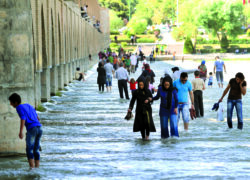
Tirgan feast, or the ‘Ab Pashan’ by the Zayandeh Rud
In the ancient Iranian calendar, the thirteenth day of the month Tir was named Tirgan, in honor of ‘Tishtar, the rain bringing star’.

Atiq Jameh Mosque
A golden coin for a palm of land
It is said that the middle, ponded, land in the Atiq Jameh Mosque belonged to a Jewish man who did not have any wish to sell it.

Isfahan's Heritage: The Ilchi Mosque
A Mosque for the Ambassador’s Daughter
The Ilchi Mosque was founded at the request of Hakim Nezam ul-Din Mohammad Ilchi’s daughter, Saheb Soltan Beygom.

Isfahan's Heritage: The Saru Taqi Mosque
A Brutal Life Lesson
The life story of Saru Taqi is very bitter and sorrowful. Saru Taqi was the son of a baker from Azerbaijan; yet he could reach the highest positions in the governmental system.

Isfahan's Heritage: Shah-Dej Castle
The Honourable Lady
The lady, clad in the finest and most magnificent clothes and jewellery, threw herself down from the top of the castle in order not to be captured by the besiegers!
-
Thursday, th Dec 2024

The Safar-name of Naser Khosrow
-
Monday, th Dec 2024
Turquoise Capital Shining in Greenery
-
Wednesday, th Oct 2024
The atmosphere of Moharram in the Naqshe Jahan Square
-
Monday, th Oct 2024
The legendary downfall of a truth
-
Monday, th Jul 2023
Muharram Ambience in Naqsh-e Jahan Square
-
Saturday, th Jul 2023
The Ladies’ Street
-
Wednesday, th Jul 2023
A Skirt Full of Roses